
Radiation Detection Systems Explained
Principles, System Types & Role in Modern Infrastructure Security. Radiation detection systems play a critical role in border security, airport cargo screening, industrial monitoring, and critical infrastructure protection. Unlike metal detection or explosive imaging systems, radiation detection technology is designed to identify radioactive materials that may be concealed within vehicles, cargo, parcels, or transported goods.
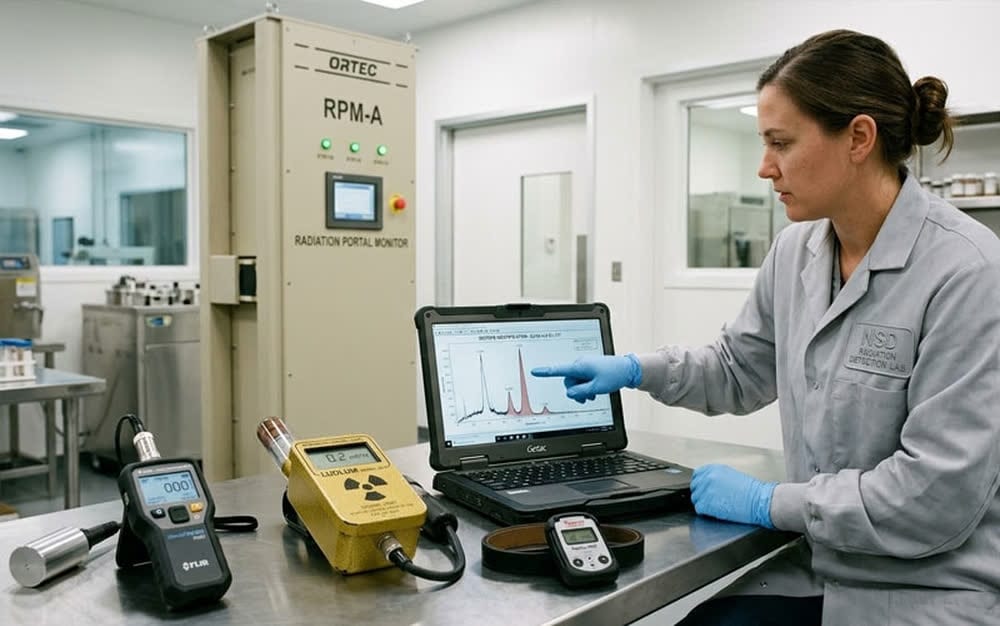
Radiation Detection Systems Explained
Radiation detection systems play a critical role in border security, airport cargo screening, industrial monitoring, and critical infrastructure protection.
Unlike metal detection or explosive imaging systems, radiation detection technology is designed to identify radioactive materials that may be concealed within vehicles, cargo, parcels, or transported goods.
In modern infrastructure environments, radiation detection adds a specialized layer of protection against unauthorized movement of radioactive sources.
This guide explains how radiation detection systems work, where they are deployed, and how they integrate within broader security architecture.
What Is Radiation Detection?
Radiation detection refers to the identification and measurement of ionizing radiation emitted by radioactive materials.
These materials may include:
- Industrial radioactive sources
- Medical isotopes
- Illicit nuclear materials
- Contaminated cargo
- Improperly transported radioactive goods
Types of Radiation Commonly Monitored:
- Gamma radiation
- Neutron radiation
- Beta radiation (in specialized applications)
Radiation detection systems measure radiation levels and trigger alerts when thresholds exceed safe or expected levels.
How Radiation Detection Systems Work (Simplified)
Radiation detection systems operate through structured analysis phases:
When radioactive particles interact with detection sensors, they produce measurable signals that are analyzed electronically. If detected radiation exceeds predefined thresholds, an alert is generated.
Core Components of Radiation Detection Systems
Detection Sensors
Technologies include Scintillation detectors, Geiger-Müller tubes, Semiconductor detectors, and Neutron modules. Sensors convert radiation interaction into measurable electrical signals.
Signal Processing Unit
Processes raw signals using Energy discrimination, Noise filtering, and Background compensation. Data logging ensures accurate readings and historical auditability.
Alarm & Alert Mechanism
Triggers Audible alarms, Visual indicators, and Control room notifications when thresholds are reached. Alert thresholds are configurable based on site-specific requirements.
Types of Radiation Detection Systems
Radiation Portal Monitors
Installed at Border checkpoints, Cargo terminals, Seaports, and Airport cargo zones for high-throughput vehicle and goods monitoring.
Portable Radiation Survey Meters
Handheld or mobile units used for on-site inspection, secondary screening, industrial zone assessment, and emergency response.
Vehicle-Mounted Detection
Integrated with vehicle inspection systems or cargo scanning vehicles to support mobile border and law enforcement operations.
Fixed Industrial Radiation Monitoring
Used in oil & gas facilities, industrial plants, and nuclear-adjacent zones to monitor environmental radiation levels continuously.
Where Radiation Detection Systems Are Deployed
Border & Customs Installations
Screening cargo trucks and container scanning to prevent unauthorized transport.
Airports
Cargo terminal monitoring and high-security airside access freight inspection.
Seaports
High-sensitivity portal monitors for large container volume screening with integrated alerts.
Industrial & Oil & Gas Facilities
Hazardous material compliance, environmental safety, and access monitoring.
Difference Between Radiation Detection & X Ray Scanning
Radiation Detection:
- Measures emitted radiation from materials.
- Identifies radioactive sources.
X Ray Scanning:
- Generates radiation to image objects.
- Visualizes object contents.
They serve different purposes and often operate together in layered security architecture.
Environmental & Maintenance Requirements
Environmental & Operational:
- Background radiation levels
- Environmental shielding
- Weather exposure
- Vehicle throughput speed
- Cargo density
Calibration & Testing:
- Sensor calibration
- Background baseline measurement
- Alarm threshold validation
- Periodic performance verification
Calibration ensures detection accuracy and compensates for environmental variables.
Explore Radiation Detection Solutions
Integration & Lifecycle Management
Integration links with:
- Command centers
- Vehicle inspection systems
- Cargo scanning systems
- Access control infrastructure
- Incident management platforms
Maintenance requires:
- Routine sensor inspection
- Software updates
- Performance benchmarking
- Environmental compensation adjustments
Modern systems incorporate spectrum analysis and adaptive algorithms to manage false alarms while maintaining sensitivity.
Frequently asked questions
Q1What is a radiation detection system?+
It is a system designed to detect and measure ionizing radiation emitted from radioactive materials.
Q2Where are radiation portal monitors used?+
At borders, cargo terminals, seaports, and high-security checkpoints.
Q3Can radiation detection systems detect nuclear materials?+
They detect radioactive emissions above threshold levels, including those from nuclear materials.
Q4Is radiation detection different from X ray scanning?+
Yes. Radiation detection measures emitted radiation; X ray creates images through generated beams.
Q5Do airports use radiation detection systems?+
Yes, primarily in cargo screening areas to identify hazardous radioactive goods.
Q6Do radiation systems require calibration?+
Yes. Periodic calibration ensures detection reliability and sensitivity accuracy.
Q7Are radiation detection systems portable?+
Some models are handheld/portable survey meters; others are fixed portal structure installations.
Q8Can radiation systems integrate with vehicle inspection systems?+
Yes. Integration enhances layered monitoring for comprehensive checkpoint security.
Request Radiation Monitoring Consultation
Connect with our specialists for structured radiation detection and monitoring solutions for critical infrastructure.
Explore further
Industry Pages
Use Pages
Product Pages
Service & Location Pages
- Security Risk Assessment & System Planning→
- Custom Security Solution Integration→
- Security Equipment Calibration & Testing→
- Annual Maintenance Contract for Security Equipment→
- Lifecycle Management for Detection Equipment→
- Security Equipment Provider in Gujarat→
- Security Equipment Supplier in Mumbai→
- Security Equipment Exporter from India→
Speak to Radiation Detection Specialist
Connect with our specialists for structured radiation detection and monitoring solutions for critical infrastructure.