
Explosive Detection Equipment for Railway Security
Railway networks operate in open, high-density public environments where threat detection must be rapid, scalable, and adaptable to dynamic security conditions. Unlike controlled aviation zones, railway stations, platforms, yards, and suburban transit systems require flexible deployment of explosive detection systems across multiple operational layers.
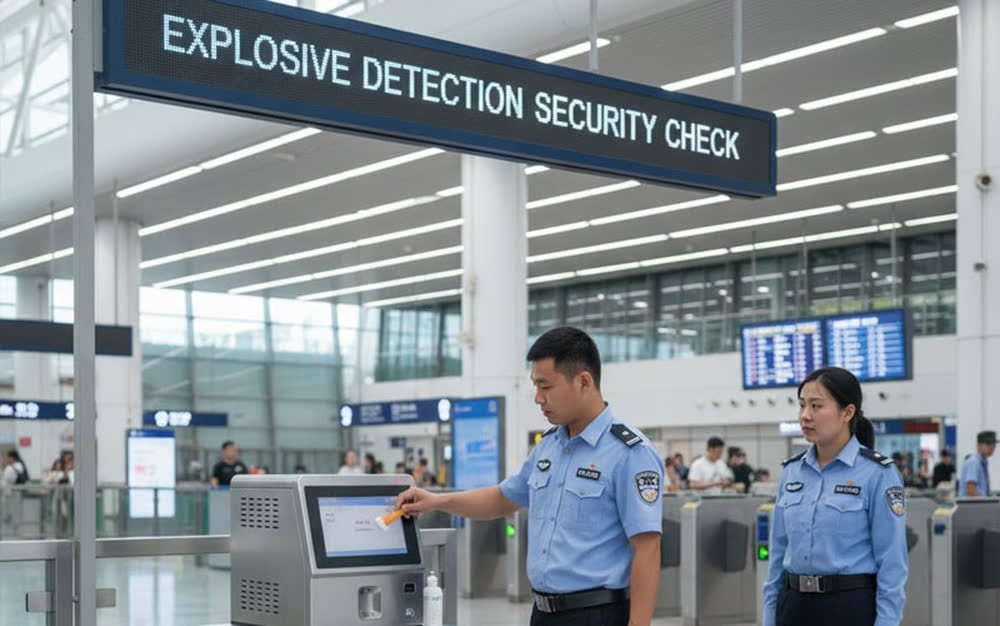
Explosive Detection Equipment for Railway Security
Explosive Detection Equipment for Railway Security strengthens protection at entry gates, platforms, luggage zones, and high-risk corridors by identifying concealed explosive materials before incidents occur.
Kapri Corp supplies and supports Explosive Detection Equipment for Railway Security, designed for metropolitan rail networks, intercity terminals, suburban systems, and transit corridors across Mumbai and major railway hubs in India.
Why Railways Require Dedicated Explosive Detection Systems
Railway environments present distinct risk factors:
- High passenger volume
- Open access platforms
- Unattended baggage risks
- Multi-point entry systems
- Peak-hour congestion
- Integration with metro & city transport
Security objectives include:
- Detecting concealed explosive materials
- Screening suspicious baggage
- Supporting intelligence-based inspection
- Protecting platforms and waiting areas
- Enabling rapid field response
Explosive detection systems provide an additional precision layer beyond metal detection and X-ray screening.
Types of Explosive Detection Equipment Used in Railway Security
Explosive Trace Detectors (ETD)
Commonly deployed at:
- Secondary screening areas
- Platform security checkpoints
- High-risk station entry points
Detect microscopic explosive residue and deliver rapid results within seconds.
Explosive Vapor Detectors (EVD)
Used in:
- Enclosed station areas
- Waiting halls
- Suspicious object zones
- High-alert deployments
Portable X Ray Scanners
Deployed for:
- Unattended baggage inspection
- Suspicious package examination
- Platform-level threat assessment
- Temporary event-based screening
Non Linear Junction Detectors (NLJD)
Used to detect:
- Concealed electronic triggering devices
- Hidden surveillance devices
- Embedded electronic components
Integration Within Railway Security Architecture
A structured railway security model includes:
Explosive detection equipment acts as a precision verification layer within this framework.
Considerations for Railway Authorities
Railway security planners typically evaluate:
- Detection sensitivity
- Response time
- False alarm rate
- Portability
- Environmental durability
- Training requirements
- Integration capability
- Lifecycle cost
Kapri Corp assists with:
- Threat risk assessment
- Deployment planning consultation
- Technical comparison sheets
- Installation & commissioning support
- Annual Maintenance Contracts
Request Railway Explosive Risk Assessment
Benefits of Railway Explosive Detection Systems
Enhanced Public Safety
Early detection reduces risk in crowded platforms and transit corridors.
Flexible Deployment
Portable systems support routine screening, intelligence-triggered operations, and temporary security reinforcement.
Multi-Layer Security Strengthening
Combined with WTMD, X-Ray Scanners, and CCTV Monitoring, these systems improve overall network resilience.
Scalable for Networks
Systems can be deployed across new suburban rail lines, metro-rail interchanges, and intercity terminals.
Maintenance & Lifecycle Support
Explosive detection systems require:
- Calibration
- Sensor testing
- Software updates
- Consumable replacement
- Preventive maintenance
Kapri Corp provides:
- Annual Maintenance Contracts (AMC)
- On-site technical support
- Calibration services
- Spare parts coordination
Reliable maintenance ensures detection accuracy in continuous transit environments.
Frequently asked questions
Q1What explosive detection equipment is used in railway stations?+
Railway stations use explosive trace detectors, vapor detectors, portable X ray scanners, and tactical response equipment.
Q2Are explosive detectors mandatory in railway security?+
Major railway networks deploy explosive detection systems as part of layered public security protocols.
Q3Who supplies explosive detection equipment for railway security in Mumbai?+
Kapri Corp supplies railway explosive detection systems in Mumbai and across India.
Q4What is the difference between ETD and X ray screening?+
ETD detects microscopic explosive residue, while X ray scanners image baggage contents.
Q5Do railway explosive detection systems require maintenance?+
Yes. Regular calibration and preventive maintenance ensure reliable detection.
Q6Can portable X ray systems be used on platforms?+
Yes. Portable systems allow inspection of suspicious unattended items.
Q7How long does deployment take for railway explosive detection systems?+
Deployment timelines depend on station layout and operational requirements.
Railway Explosive Detection Support in Mumbai & Across India
Kapri Corp supports:
Our systems are deployed in high-footfall transit environments requiring operational reliability and threat precision.
Evaluate the Right Railway Explosive Detection Architecture
If you are evaluating explosive detection equipment for railway security, Kapri Corp can assist with:
- Technical specifications & comparison sheets
- Station-level threat assessment
- Deployment consultation
- Installation & commissioning support
- Annual Maintenance Contract proposal
For integrated railway explosive detection solutions in Mumbai and across India, connect with our technical team for structured consultation.
Kapri Corp – Integrated Railway & Urban Transit Explosive Detection Solutions.
Get Proposal for Railway Explosive Detection Systems
For integrated railway explosive detection solutions in Mumbai and across India, connect with our technical team for structured consultation.
Explore further
Industry Pages
Use Pages
Product Pages
Speak to Railway Security Specialist
For integrated railway explosive detection solutions in Mumbai and across India, connect with our technical team for structured consultation.