
How Bomb Disposal Equipment Is Deployed
Structured Response Framework, Equipment Coordination & Safety-Led Operational Handling. Bomb disposal operations require structured coordination, specialized equipment, and strict adherence to safety protocols. Deployment follows defined response stages designed to protect responders, infrastructure, and the public.
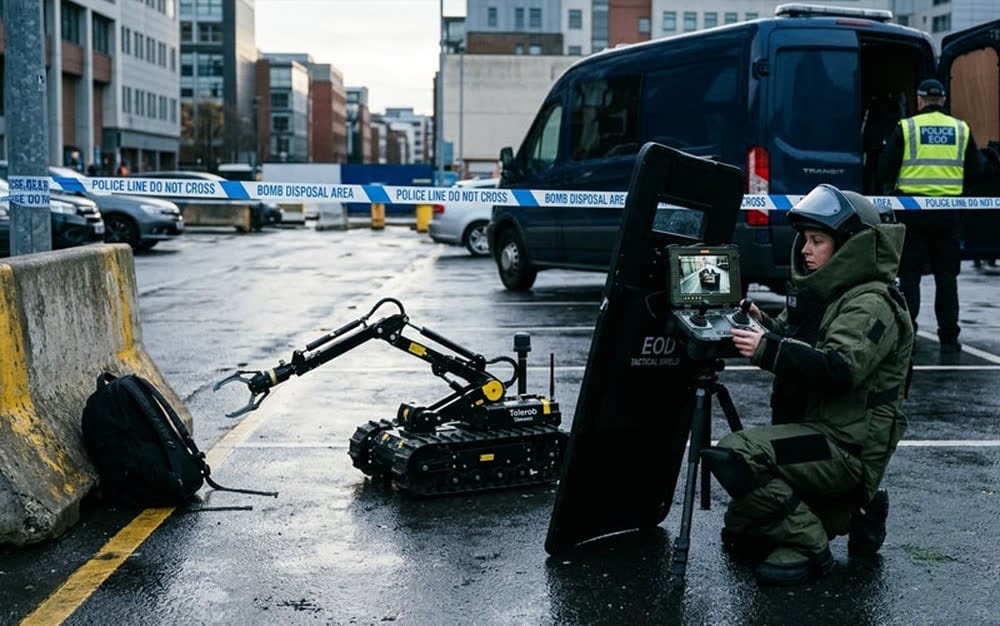
How Bomb Disposal Equipment Is Deployed
Bomb disposal operations require structured coordination, specialized equipment, and strict adherence to safety protocols.
Deployment of bomb disposal equipment is not improvised. It follows defined response stages, controlled assessment procedures, and layered safety measures designed to protect responders, infrastructure, and the public.
This guide explains how bomb disposal equipment is deployed within structured operational frameworks, without detailing sensitive tactical procedures.
Structured Response Stages
Deployment follows a systematic safety-first methodology:
Initial Threat Identification
Triggered by reports or screening flag. Priority: containment.
Establishing Safety Perimeter
Creation of security perimeters and evacuation protocols.
Remote Assessment
Imaging via Portable X-Ray and Robots from a safe distance.
Protective Equipment Deployment
Use of bomb suits and shielding if proximity is required.
Controlled Neutralization
Use of disruptors or suppression devices under strict protocol.
Containment & Transport
Movement to safe zone using specialized containment equipment.
Post-Incident Verification
Secondary sweep and clearing site for operational resumption.
Types of Bomb Disposal Equipment Used
Portable X Ray Systems
Used for remote structural assessment:
- Internal object visualization
- Component identification
- Non-invasive inspection
Tactical Robots
Reduces direct human exposure:
- Approach & inspection
- Object manipulation
- Placement of neutralization tools
Bomb Suits
Used in controlled proximity situations:
- Blast protection
- Fragmentation shielding
- Thermal resistance
Water Jet Disruptors
High-precision neutralization tools:
- Targeted neutralization
- Controlled disruption
- Strict protocol operation
Bomb Suppression Blankets & Baskets
Immediate containment layers:
- Blast containment
- Fragment control
- Temporary isolation
Hook & Line Kits
Responder safety distance tools:
- Remote object movement
- Distance manipulation
- Controlled repositioning
Layered Deployment Strategy
Bomb disposal deployment follows a layered strategy to prioritize safety:
- Remote assessment first
- Physical approach only if necessary
- Containment before disruption
- Controlled neutralization
- Verification sweep
Integration with Screening Infrastructure (X-Ray, CT, ETD, Vehicle Inspection) ensures rapid response across aviation, transit, and industrial sectors.
Aviation, Transit & Infrastructure Roles
In Aviation & Transit:
- Immediate perimeter lockdown
- Secondary screening escalation
- Rapid area isolation and evacuation
- Mobile response deployment
In Industrial Facilities:
- Vehicle access control triggers
- Remote scanning evaluation
- Hazard mitigation coordination
- Environmental safety considerations
Training & Preparedness: Deployment requires certified personnel, operational drills, and routine maintenance of equipment.
Explore Bomb Disposal Solutions
Frequently asked questions
Q1How is bomb disposal equipment deployed?+
Through structured response stages including remote assessment, containment, and controlled neutralization.
Q2Is bomb disposal handled manually?+
Modern operations prioritize remote handling using robots and portable imaging systems to minimize risk.
Q3What equipment is used in bomb disposal?+
Portable X-Ray scanners, robots, bomb suits, disruptors, and containment systems.
Q4Is bomb disposal equipment used in airports?+
Yes, as part of layered aviation security to manage suspicious objects identified during screening.
Q5Do metro systems maintain bomb disposal equipment?+
High-risk transit systems may maintain coordinated response protocols and equipment for rapid isolation.
Q6Is bomb disposal equipment integrated with screening systems?+
Yes. Alerts from screening systems often serve as the primary trigger for equipment deployment.
Q7Does bomb disposal equipment require maintenance?+
Yes. Regular calibration and inspection ensure operational readiness for emergency response.
Q8Is specialized training required?+
Yes. Deployment must be conducted exclusively by certified EOD personnel.
Request Consultation on EOD Equipment Deployment
For specialized bomb disposal and tactical equipment coordination, connect with our technical team today.
Explore further
Industry Pages
Use Pages
Product Pages
Service & Location Pages
- Security Risk Assessment & System Planning→
- Custom Security Solution Integration→
- Security Equipment Calibration & Testing→
- Annual Maintenance Contract for Security Equipment→
- Technical Support & Emergency Response Services→
- Lifecycle Management for Detection Equipment→
- Security Equipment Supplier in Mumbai→
- Security Equipment Exporter from India→
Speak to EOD Equipment Specialist
For specialized bomb disposal and tactical equipment coordination, connect with our technical team today.